How CPA licensure changes are affecting CFOs and accounting talent

As states roll out their changes to CPA licensure requirements with the intention of adding alternative pathways to the 150-hour requirement, state society leaders, accounting professors and CPAs alike agree that finance leaders should be cognizant of these changes that are aimed to improve the shortage of financial talent.
While state society leaders have banded together to make sure their changes are uniform, the move comes at an interesting time. Some have raised questions as to the uniformity of these decisions, as well as their timing coinciding with the retirement of longtime AICPA president Barry Melancon, whose adamant opposition toward any changes to the 150-hour requirement was well publicized.
While originally intended to have accountants be more well-rounded, some argue the 150-hour requirement has played out its course. State society leaders and accounting professors agree that changes need to be made to address the current confusion of the CPA licensure process and the profession’s pipeline alike, however there are discrepancies on how to develop accounting curriculums, the value of the CPA and more.
Generational and Big Four’s impact
Though the changes to the 150-hour requirement may shorten the time it takes to become a CPA, the impact of the move in the real world varies greatly among leaders in accounting. Dr. Tim Naddy, who is the vice president of finance of the Savannah Bananas and a professor of accounting at the Savannah College of Art and Design, said this is a problem that has become a generational issue.

Dr. Tim Naddy
Permission granted by Tim Naddy
“The root of our problems in accounting is that the industry is heavily disconnected from the incoming generation,” Naddy said. “It’s funny, when you’re on the inside, the industry looks at students and says, ‘They just don’t understand us.’ But no, they don’t need to understand us; we need to understand them.”
Naddy said the communication processes that bring together mentors and mentees in accounting can be unproductive and corporatized. He argues many of these opportunities have lost their value in addressing the real challenges future accountants are facing.
“We need to be on campus having real conversations with students, and not the usual route of showing up to Beta Alpha Psi meetings, hosting icebreakers or doing something at homecoming,” he said. “At those events, students are already in suits, resumes in hand, trying to impress us. That’s not when these conversations should happen. We need to talk to them during the year — when they’re stressed from coursework, unsure about jobs, wondering if they even need to get a CPA license.”
Andrew Hunzicker, CPA and founder of the DOPE CFO program, agrees it’s a generational issue but argues that the CPA is still the paramount of financial credentials. He argues that because the Baby Boomers are aging out, talent shortages are an “insolvable problem” across industries not limited to accounting. However, he argues changing credentials, like removing the 150-hour requirement, lowers standards.
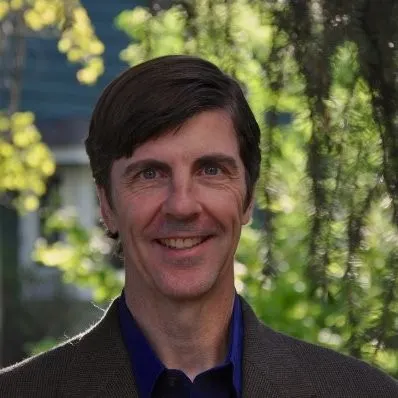
Andrew Hunzicker
Permission granted by Andrew Hunzicker
“Let’s think about brain surgeons for example, we know there’s a shortage, but would you want us to just make it super easy to become a brain surgeon? Or a pilot? No, of course not,” Hunzicker said. “There are certain industries where we have to solve the problem some other way — lowering the bar isn’t the answer.”
He went into detail how, because of the talent shortage, high-quality accountants are having very lucrative careers because there’s demand.
“Most industries are still served by people who are, frankly clueless, whether they’re CPAs, accountants or CFOs,” Hunzicker said. “They’re just not doing great work, and their clients are unhappy. The upside is, if you’re a high-quality CPA, you can make a ton of money right now, but it starts with getting the expertise, and the CPA is that first step.”
Naddy agreed that the 150-hour requirement’s removal is only a small part of addressing the challenges of the shortage. However, he said the current structure has “accidentally” created a system where firms can hire bachelor’s-level graduates, get two busy seasons out of them, then see them leave for private industry. He says that’s what’s happening now.
“The Big Four can’t get enough accountants, so they hire bachelor’s graduates, even without CPAs, just to crank out work,” Naddy said. “After two years, those hires leave. They double their salary, cut their hours and no one in private industry is asking for the CPA license, so they never finish it.”
He detailed how this has resulted in a workforce of well-trained accountants — trained by the Big Four — who don’t see value in a CPA. He said this is a “big issue” because by spreading out the CPA exam and removing the urgency, large accounting firms took away the CPA as a required checkbox for employment at CPA firms.
“CPA firms need to get back to hiring people with CPA licenses,” Naddy said. “That would keep people longer because they’d be working toward partnership or manager roles, but because firms rely on recent grads, they’re forced to hope those hires stick around long enough to finish the CPA exam, many of whom never do.”
Addressing the curriculum and student concerns
Dr. Jack Castonguay, an associate professor of accounting at Hofstra University, said a growing concern in the credentialing process he is finding among finance leaders is the impact the change will have on the passing rate of the CPA exam. He said that some argue that the way the current system is set up, the experience many are getting in their fifth year is what’s allowing them to get through the exam.
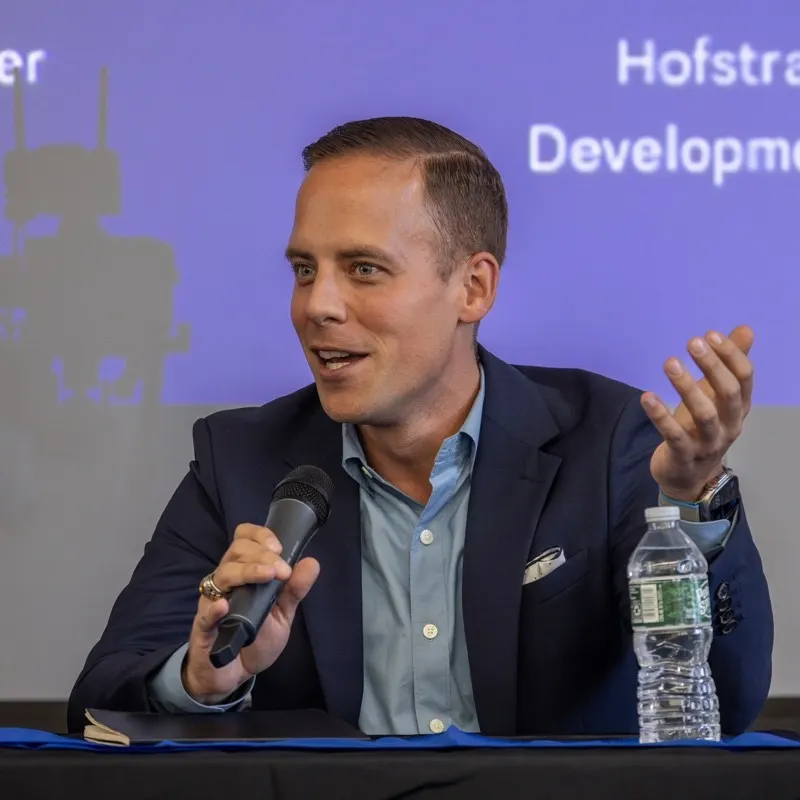
Jack Castonguay
Permission granted by Jack Castonguay
“One of the concerns that some have voiced — and to be clear, I don’t necessarily agree with these concerns — is that if we go to just a bachelor’s degree, two years of experience and passing the CPA exam to be licensed, you’ll actually have fewer students passing the exam,” Castonguay said.
“You may get more undergrad students, but some think it actually may hurt CPA outcomes even more. Right now, a lot of students take their exams during their fifth year while earning the extra 30 credits, and some states have strict rules on what undergrad courses have to cover, and universities physically cannot cover everything the exam tests,” he added. “So I do understand that concern.”
Though Naddy and Castonguay both teach accounting, they disagree about the order in which accounting should be taught. While Castonguay agrees with the traditional model of teaching financial accounting before cost accounting, Naddy believes these two should be flipped.
“I’ve been thinking about this for 25 years, that if we introduced cost accounting first, we’d do the profession a giant service, because students would be able to say: ‘Oh, this is how to run a business,’” Naddy said. “Then, if they want to go into accounting, they can learn how to report and maybe go into audit, where the job is to assess whether financials are fairly represented in accordance with GAAP. Or maybe they want to take the business track, get the accounting degree and use it to run their own company — without getting into [Security and Exchange Commission]-level stuff.”
Naddy broke down how if accounting curriculums started teaching cost accounting first, students would better understand the mechanics of running a business. “Financial reporting is a separate expertise, and frankly, if you’re running your own business and don’t need loans or investors, no one cares about your financial statements,” Naddy said. “You just need to know there’s enough money in the bank.”
In contrast, Castonguay argues that cost accounting courses and textbooks often focus on traditional manufacturing examples, like calculating inventory and overhead costs for car companies. He added that this is an area where most students will not work in and so teaching them this first may create confusion or disinterest.
“You’d be introducing students to this concept of costing, and they’re saying, ‘Well, this is kind of boring, because the odds of me working for a manufacturer are one in five,’ so the reaction is, ‘How is this going to be applicable to me when I get out?’”
Castonguay said he has heard this idea before and it’s “trying to get to the right problem” about making accounting education more interesting and applicable at the same time.
“I’ve come to a full 180 on my thoughts about financial accounting at the undergrad level,” Castonguay said. “I don’t think we should do debits and credits in accounting or finance 101 courses, because I think that puts off so many people right away and they find it hard and counterintuitive. And it also highlights the single worst part of accounting for many people: bookkeeping.”
Castonguay highlighted that the problem is that curriculums don’t introduce accounting students to financial 101 as a financial statement analysis class. “For example, how income impacts the balance sheet and vice versa. Instead, we’re teaching them how to do all these journal entries with debits and credits and T-accounts.”
Clearing up confusion
Calvin Harris, who is the CEO of the New York State Society of CPAs and former nonprofit CFO, has said that the confusion of the credential process may linger for some time, but the development of a roadmap for young accounting talent is possible.
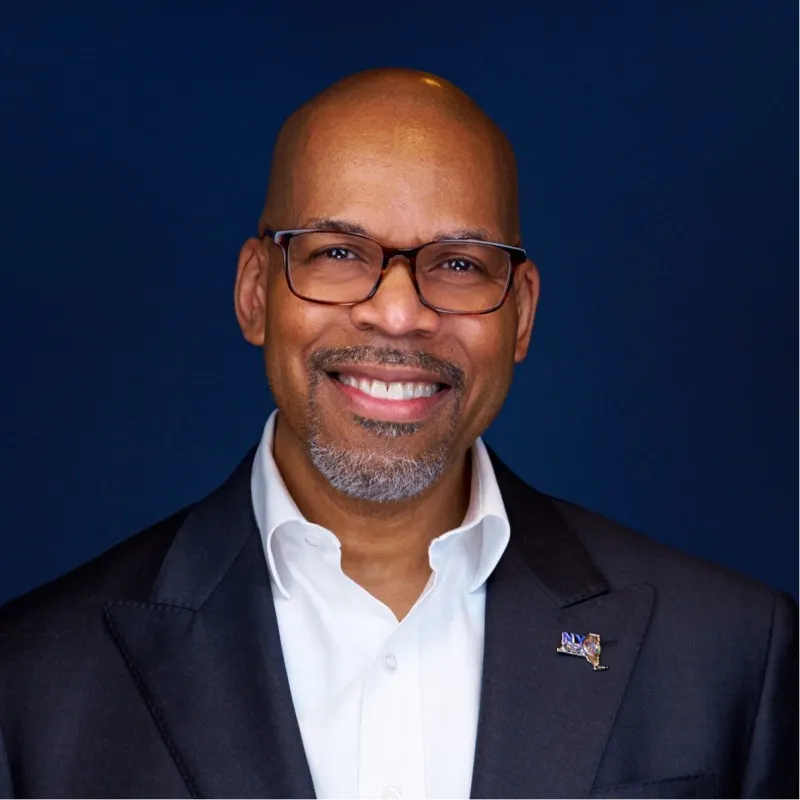
Calvin Harris
Permission granted by Calvin Harris
“The unfortunate reality is that it’s going to be confusing for a few years,” Harris said. “When students visit, like a group from Marist University did recently, I try to break it down class by class. I told them: Freshmen and sophomores will likely have both options, the 120 credits plus two years of experience or 150 credits plus one year of experience. Juniors are on the edge, it depends on what state you plan to get licensed in. Seniors should assume 150 plus one is your only option, and maybe they’ll get lucky with a second pathway.”
Harris explained that although the confusion is highly prevalent (Castonguay said this is the biggest challenge in his role right now), Harris said this is nothing new. However, he did put the onus on organizations like the NYSSCPA to improve their communication on the emerging requirements.
“When I graduated from Morehouse College in Georgia and moved to Maryland, I found out I was missing two classes Maryland required,” he said. “So my first year at Arthur Andersen, I had to go to night school. Now, that was more than 30 years ago, so the difference now is, the information is easier to find through NASBA, AICPA and state societies. But we all, the schools, societies and firms, need to do a better job of educating students on state-specific requirements.”
He also provided some context on the timing of Barry Melancon’s retirement with the state’s identical moves to the offering of additional pathways. He said that although it may appear like Melancon’s retirement was the last thing holding the 150-hour requirement in place, Harris said that is purely coincidental. He did however say that over the years, communication between the state societies on this topic increased.
“I can see how some can think that, but it’s not entirely fair to [Melancon],” he said. “He’s been a consistent leader, and whether people agree with his stance or not, he’s been steady. I’ve been in this role for about three years and from my very first meeting with state society CEOs, it was clear these conversations [about the 150-hour requirement] had been happening for a while.”
He detailed how “states talk more than people realize” and they’re in “constant contact” with “collaboration happening constantly,” but denied that Melancon’s retirement had an impact on the decision-making process. “Did people quietly hope to move forward after [Melancon’s] tenure? Maybe. But I never heard anyone say, ‘As soon as he retires, we go.’”
link