Why EY’s Myles Corson stresses the importance of a financial foundation
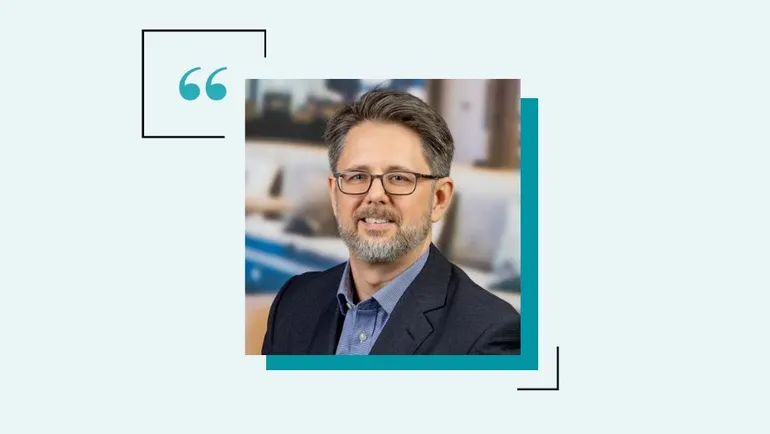
Myles Corson, who leads the CFO advisory practice at EY and hosts the EY Better Finance podcast, has an interesting perspective on corporate finance. For nearly three decades, Corson has worked for one employer, an anomaly in the field — especially in public accounting. During this time, he has had a front-row seat to the evolving duties of financial leadership.
His insights on the CFO role’s evolution, keeping finance teams engaged during technology transformations — while simultaneously practicing and developing strong communication skills — and the importance of “fortitude and resilience” in young accountants are valuable to finance leaders who are trying to communicate their team’s challenges with multiple stakeholders.
Myles Corson

Permission granted by Myles Corson
Global and Americas strategy and markets leader, financial accounting advisory services, EY
Notable previous employers:
- British Consulate-General San Francisco
This interview has been edited for brevity and clarity.
ADAM ZAKI: There are so many factors changing the role of the CFO today. Which stand out most to you?
MYLES CORSON: Throughout my career, I’ve done a lot of research on this topic because the CFO role is always changing and will continue to do so. I think there is a tendency for those tracking this to get caught up in the immediacy of the latest crisis or disruption. It’s important to look at this from a long-term perspective, focusing on sustained performance.
If we examine past cycles of economic performance, disruptions or new technologies, the individuals who succeed always exhibit the ability to have a vision. It’s become a bit cliché, but there is value in analyzing the compounding effects of the disruptions CFOs have faced, how each was unique and unprecedented in its own way and how certain leaders have navigated these changes.
Those leaders have clarity. They know what matters to their finance teams, understand their businesses inside and out and can articulate that knowledge. I believe this will continue, as CFOs who come from an informed position and truly understand the value drivers and challenges within their organizations always stand out.
What advice would you give to a CFO about to implement a new piece of technology into their finance function?
CORSON: It’s pivotal for them to communicate the challenges they face in a way that both addresses what finance is trying to solve and accounts for the human aspect of transformation by creating psychological safety during implementation.
It’s a major challenge. We conducted a study with the Saïd Business School at Oxford and found 75% of CFOs had experienced some type of failed financial transformation. There’s a human aspect to this process — externally with vendors and sales and internally with implementation. That’s why it’s important for CFOs to put time and effort into preparing from an internal lens.
Especially in finance, the team needs to understand how this technology will streamline functions, who will benefit, how it will impact their workload and whether anyone’s role will change. Finance leaders tend to be more left-brained than right-brained, more analytical, so they must ensure their teams grasp the desired outcome before implementing new technology.
Most finance professionals, including CFOs, have some consumer-facing responsibilities. As that continues, I believe finance teams will become better business partners and continue to move away from the old adage that finance is just about saying no.
Even if you let your finance team know in advance about implementing new technology, they could understandably be frustrated after working hard to meet certain requirements. How do you think the profession can address this challenge?
CORSON: That’s why finance teams need to help their people build a strong foundational skill set. It’s not about forgetting everything they’ve learned, but about taking that core skill set and augmenting it with other skills. As a profession, I think accounting in both the U.S. and the U.K. needs to focus on this. We need professionals with high-level skills, but they must also have a solid foundation of training, work experience and intellect to get there.
I think it starts with mindset. People working in finance need to be comfortable with agility. Transformation is the new normal. It used to be that we would go through a major transformation, take a breath and wait for the next one. Now, everything is always changing and finance professionals must be comfortable operating in this dynamic. The next generation needs agility, curiosity and a willingness to continually adopt and address evolving challenges.
From a CFO perspective, how do you meet the developing communication demands of the role while also building communication skills?
CORSON: As we both know, many CFOs are articulate and compelling storytellers. But to me, there’s more to it. One of the most important skills a CFO can have today is being the glue that holds the executive team together. Many organizations I’ve seen in my career struggle with this, but as finance has become more forward-facing, many CFOs have fostered strong relationships and camaraderie among leadership.
When there’s tension, CFOs can help bridge different perspectives with data. Most leadership teams will tell you they don’t have enough time for full consensus, especially given the agility and speed at which many companies operate. However, they need commitment from leadership on the vision. CFOs play a critical role in this process. Those looking to strengthen their communication skills should consider how they can help strengthen relationships within their executive leadership teams.
For several years now, technology has been able to analyze executive sentiment in real-time on earnings calls using Layered Voice Analysis. If leadership teams don’t proactively address communication gaps, particularly CFOs, analysts will spot these discrepancies, possibly with this technology, and expose divisions within the team. That’s why CFOs need to develop strong interpersonal skills and I believe they can improve by bringing their own leadership teams closer together.
You’ve been at EY for three decades, spending half that time in the U.S. What would you say to a young person who wants a career in accounting, but doesn’t want to sacrifice a proper work-life balance?
CORSON: It’s fascinating because I’ve seen five generations in the workforce during my career and there are so many different perspectives on this. I believe it goes back to the importance of building a strong foundation early on.
When I was auditing early in my career, I didn’t enjoy it at the time. But in hindsight, I see that it taught me critical skills that helped me develop into the role I have now. There’s also something to be said for the ability to demonstrate fortitude and resilience — to succeed in something you don’t necessarily enjoy in the moment.
When I started, we didn’t have phones or laptops. That’s why I think the younger generation has an incredible opportunity right now. Young accountants who are curious, willing to learn, take on challenges and work hard are in demand and their roles are crucial. They should seize opportunities, knowing fantastic ones are ahead if they prepare. The resources and technology available to them are unprecedented.
link